Plan before the field.
Case objectives, species considerations, drug selection, dosing, equipment, team roles and contingency planning.
Good field medicine begins before anyone leaves the lodge. Contact us
Summer university programs · 14 days
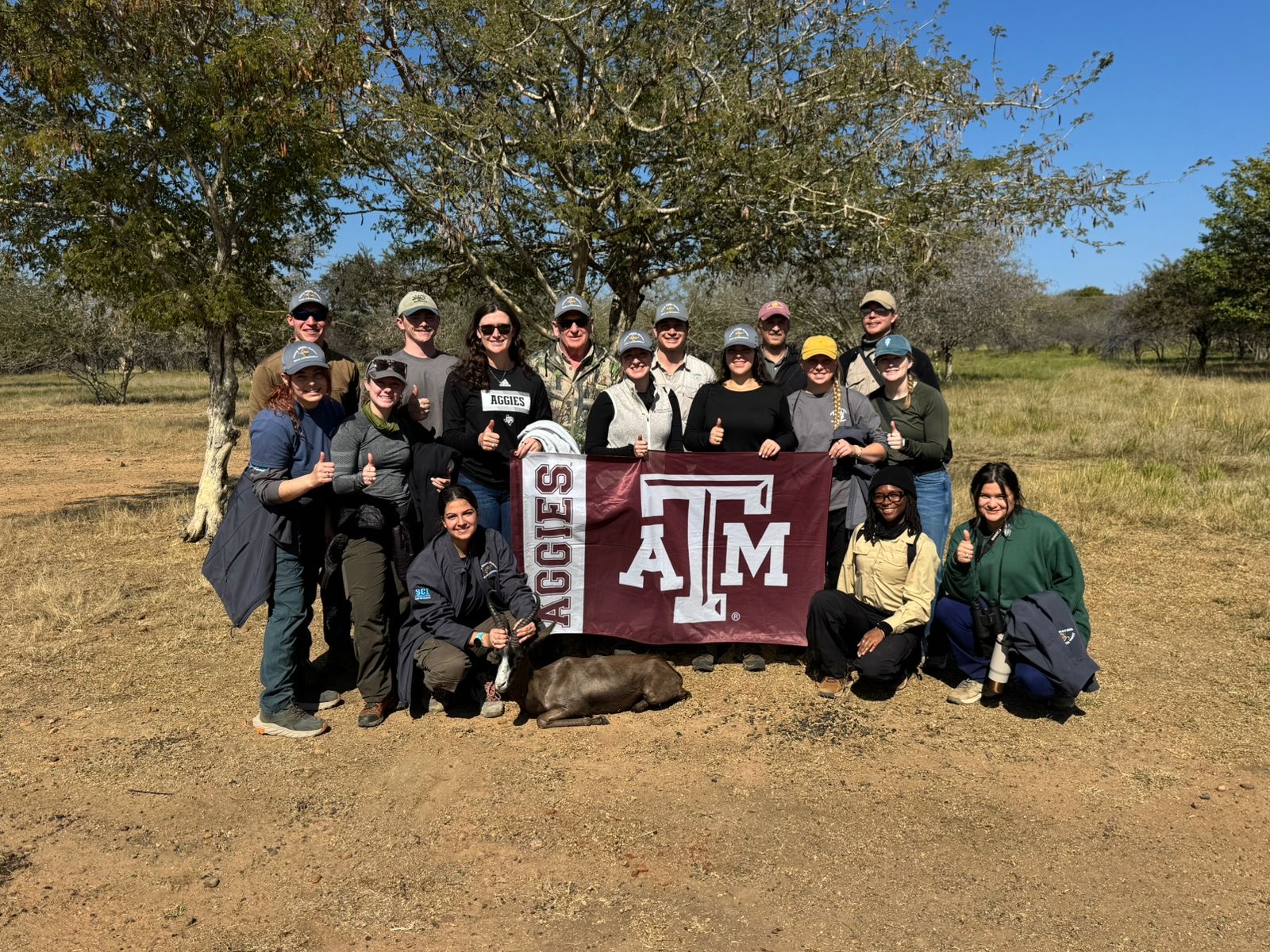
Summer students work alongside experienced wildlife veterinarians, learning how to examine, treat and care for animals in the field. Seringa is their home base for days of discovery in the Waterberg.
Immersive by design
Seringa offers intensive two-week programs during the summer, allowing students to return for the fall semester. Veterinary schools coordinate through leading veterinary professors at Texas A&M, which uses its agreement with Seringa to schedule each course. Experienced local veterinarians help lead the field program.
Learn beside the people who do this work every day.
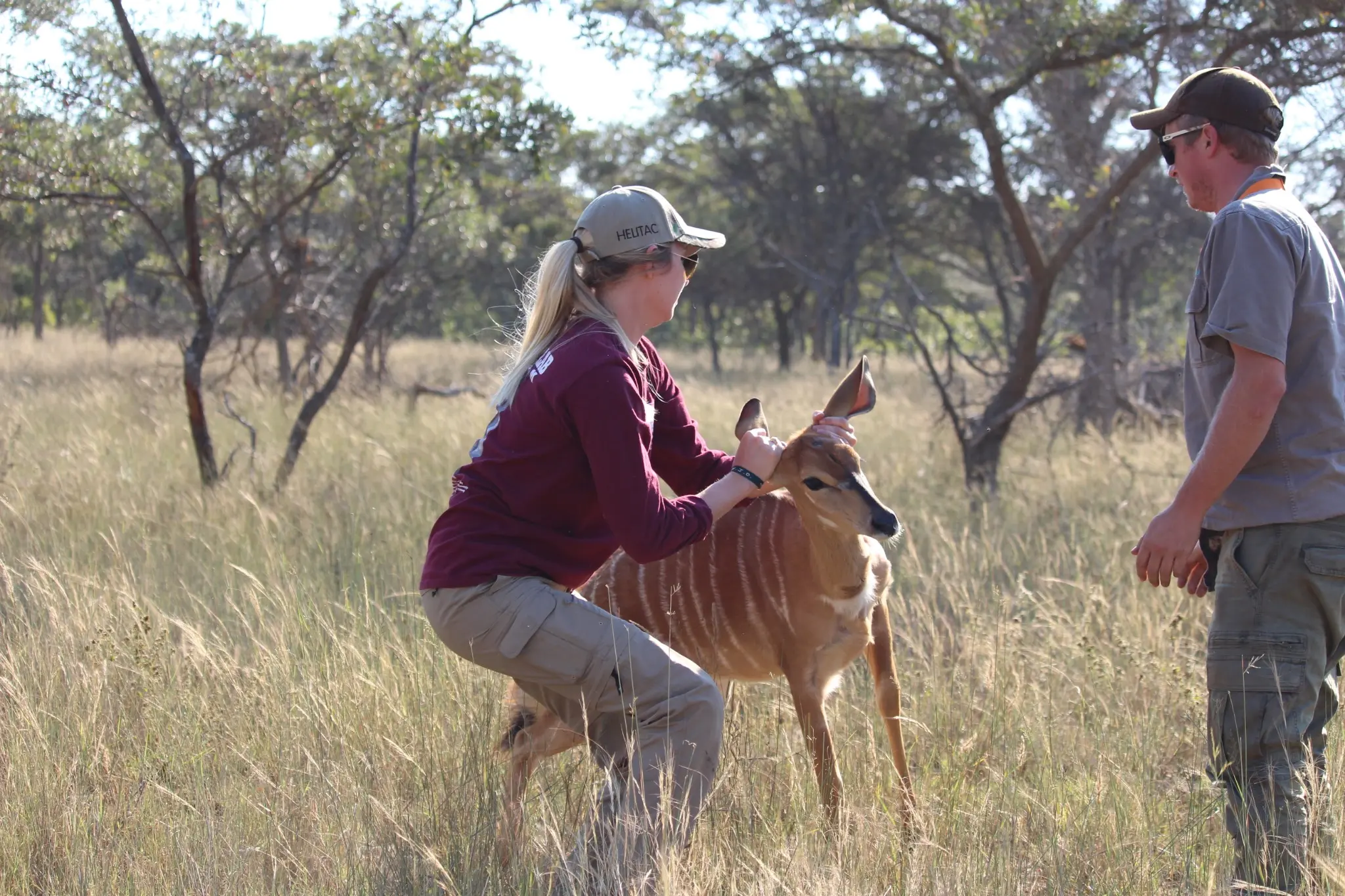
From monitoring an animal’s breathing to assisting with health checks and treatment, students connect classroom knowledge with real patients. They also learn how individual animal care supports healthy wildlife populations.
Licensed wildlife veterinarians, including experienced local practitioners, lead all clinical work. The animals’ needs determine which cases proceed, what students may do and when observation is the most responsible form of participation.
South African practitioners bring local knowledge of wildlife, terrain and herd health. Their relationships with nearby ranches extend learning beyond Seringa, with each visit guided by actual veterinary needs.
For Texas A&M students
Texas A&M veterinary students participating in the Seringa summer program receive two college credit hours for their time at Seringa. Future college-credit opportunities with other institutions are being evaluated individually and considered on a school-by-school basis.
The learning arc
The exact cases change with clinical need. The professional habits behind them remain constant.
Case objectives, species considerations, drug selection, dosing, equipment, team roles and contingency planning.
Good field medicine begins before anyone leaves the lodge.Remote delivery, approach, restraint, scene awareness and the coordinated transition from movement to patient access.
Every role matters; every handoff is deliberate.Monitoring, examination, sampling, diagnostics and treatment decisions under direct veterinary supervision.
Clinical thinking is taught in context, not isolation.Reversal, observation, release, patient safety and reflective case review after the field work is complete.
Recovery is part of the procedure—not an afterthought.African Wildlife Medicine · From the course archive
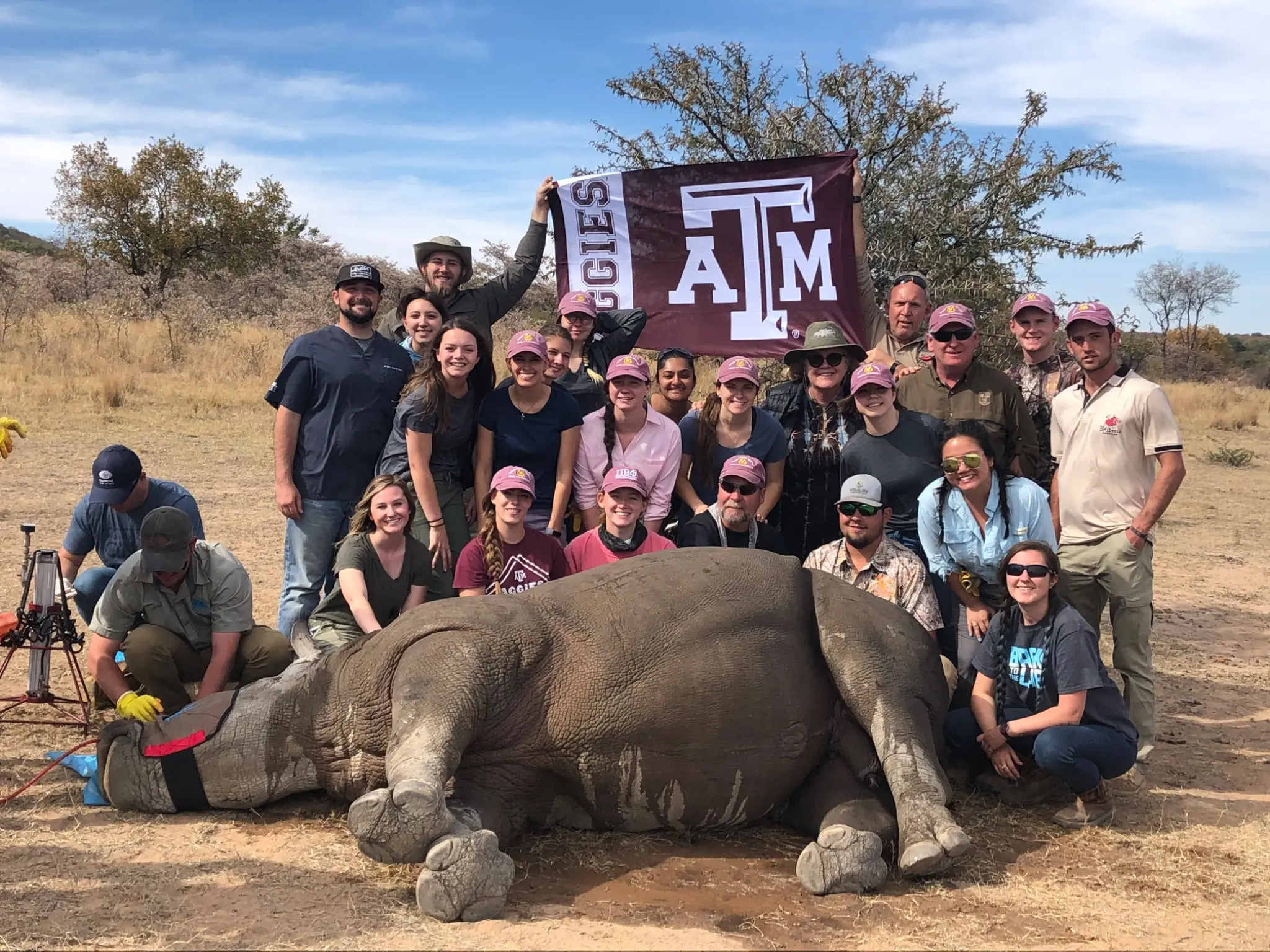
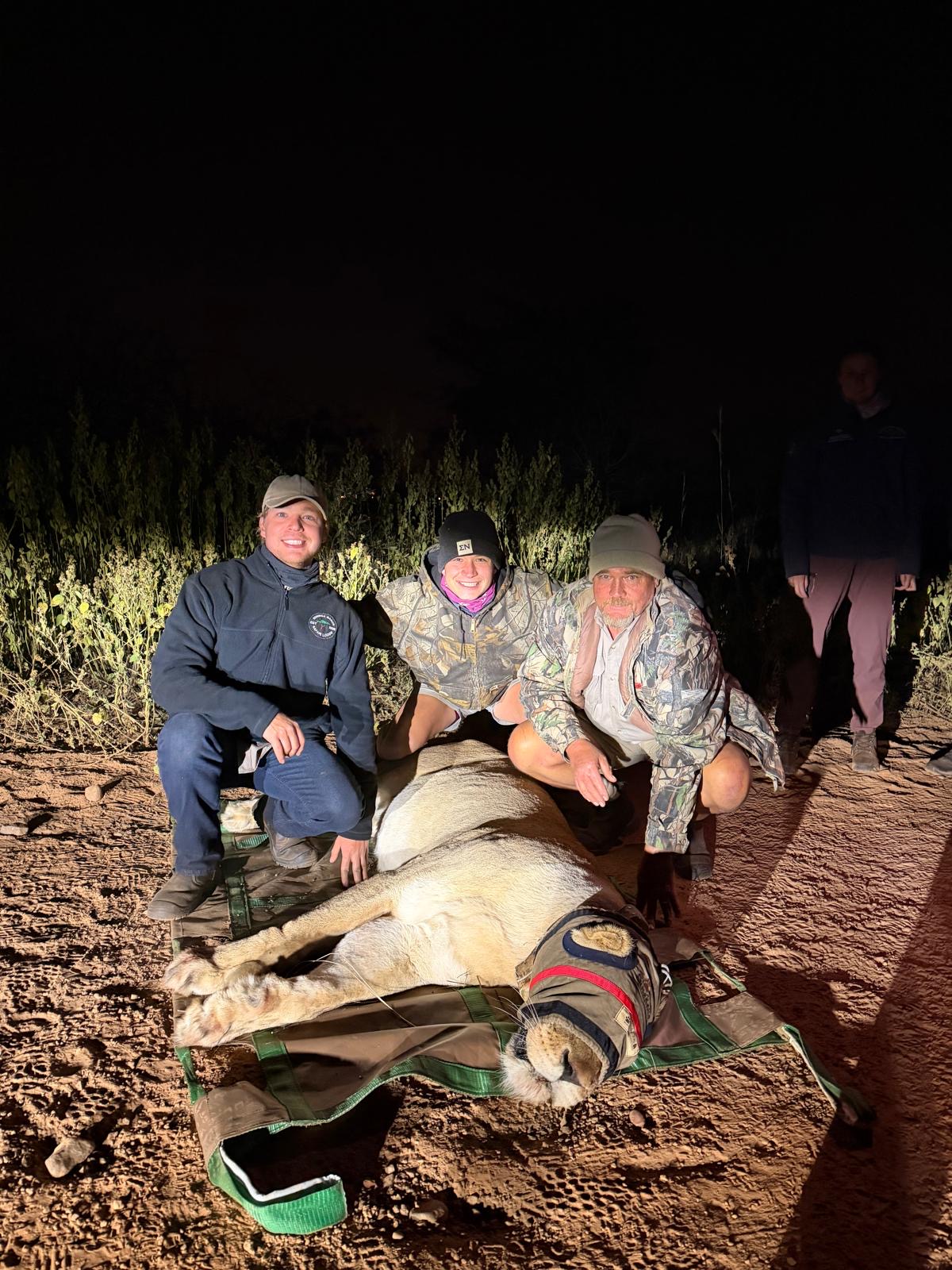
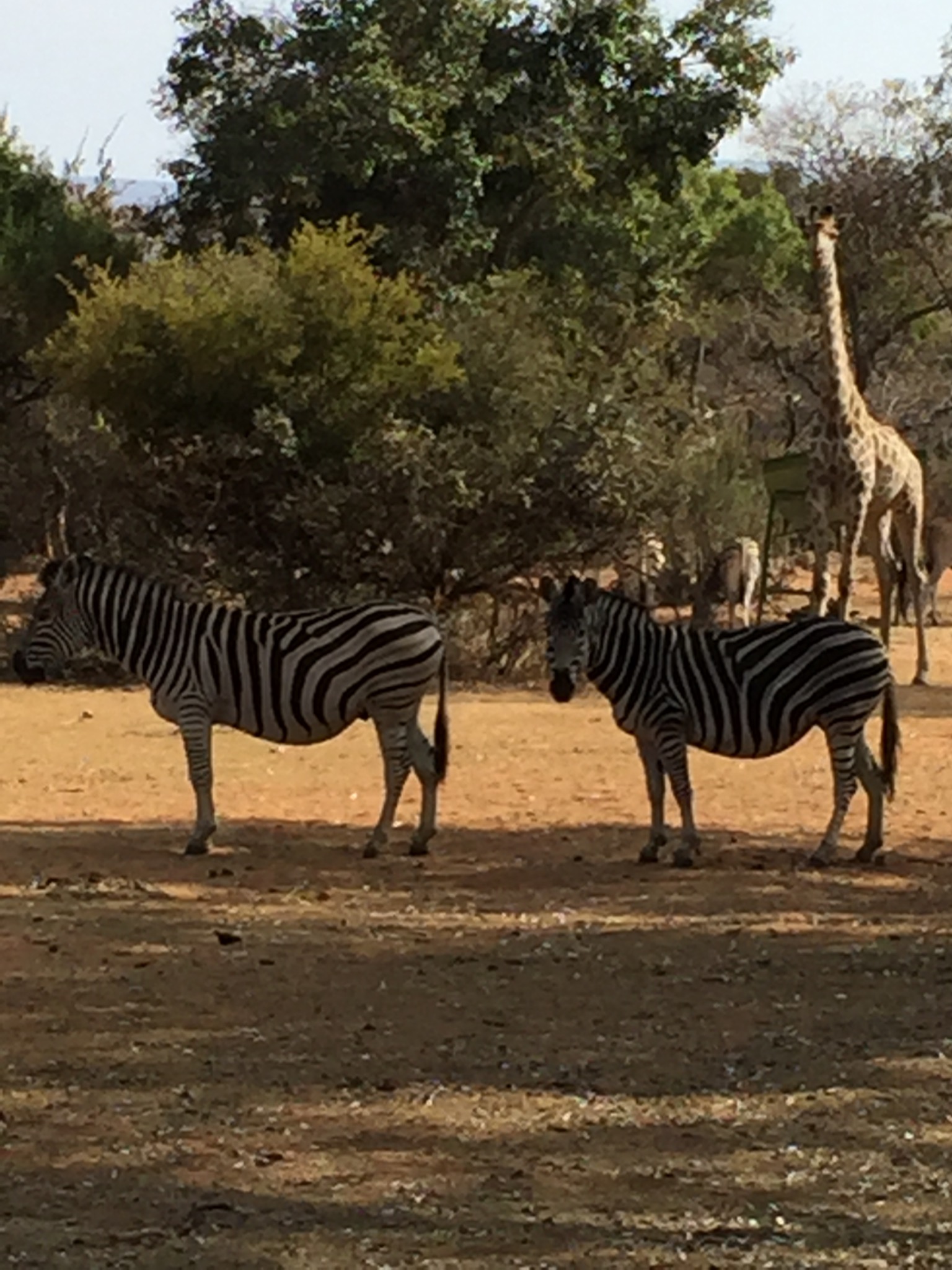
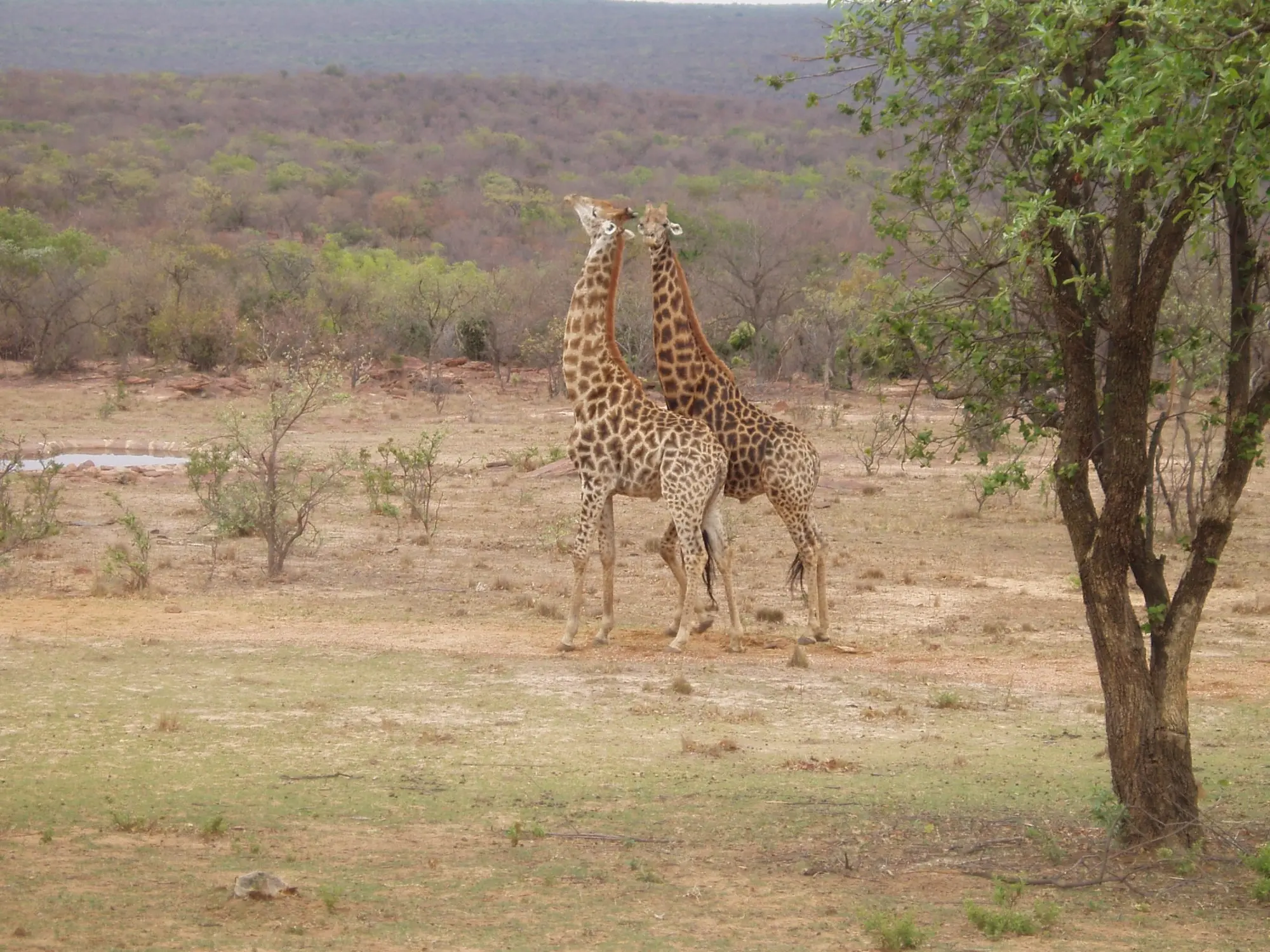
A close examination. A careful measurement. A moment together beneath a baobab. These glimpses from the 2023 course show the learning and friendships that take shape in the field.
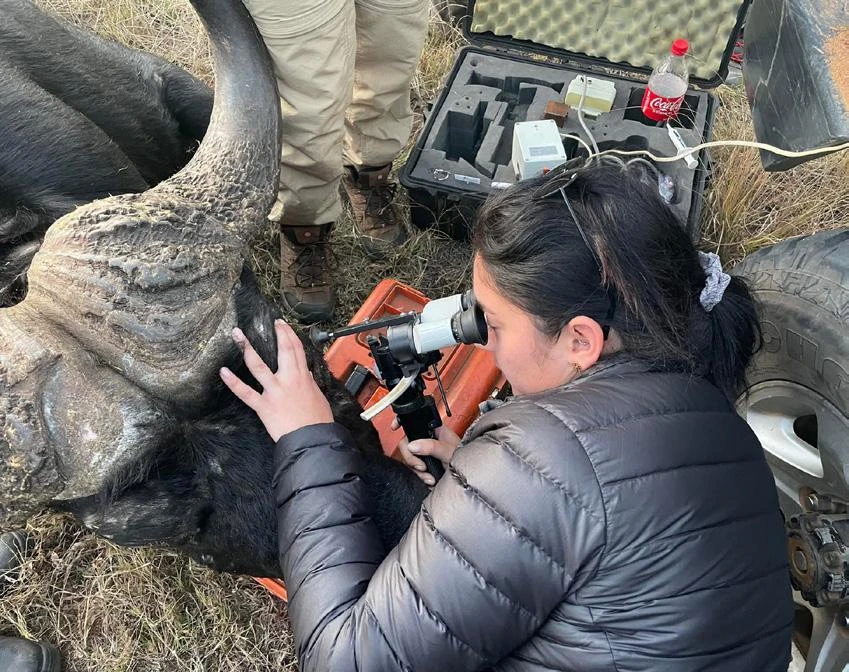
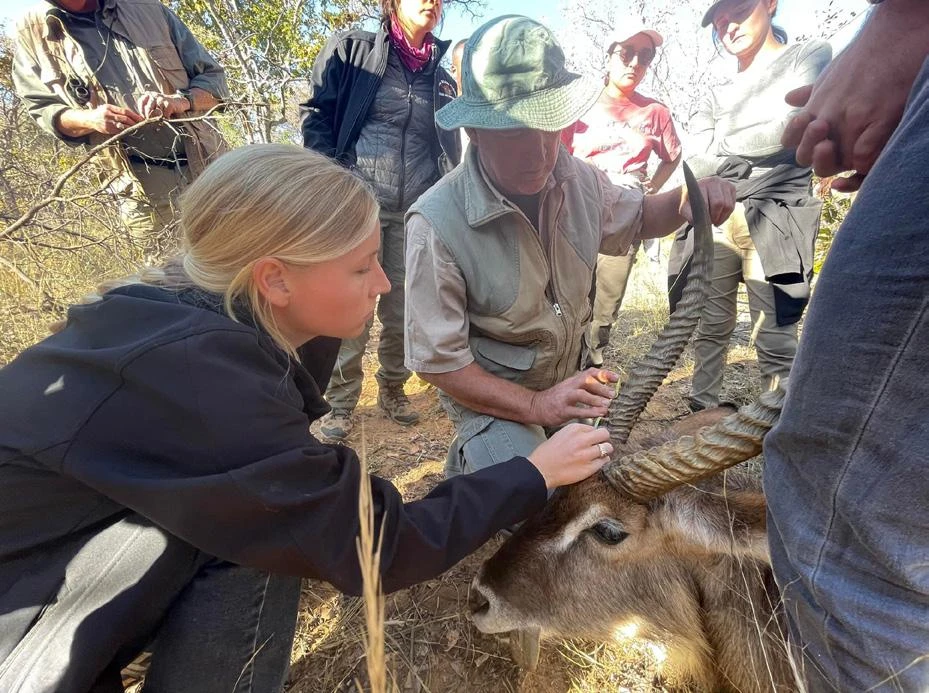
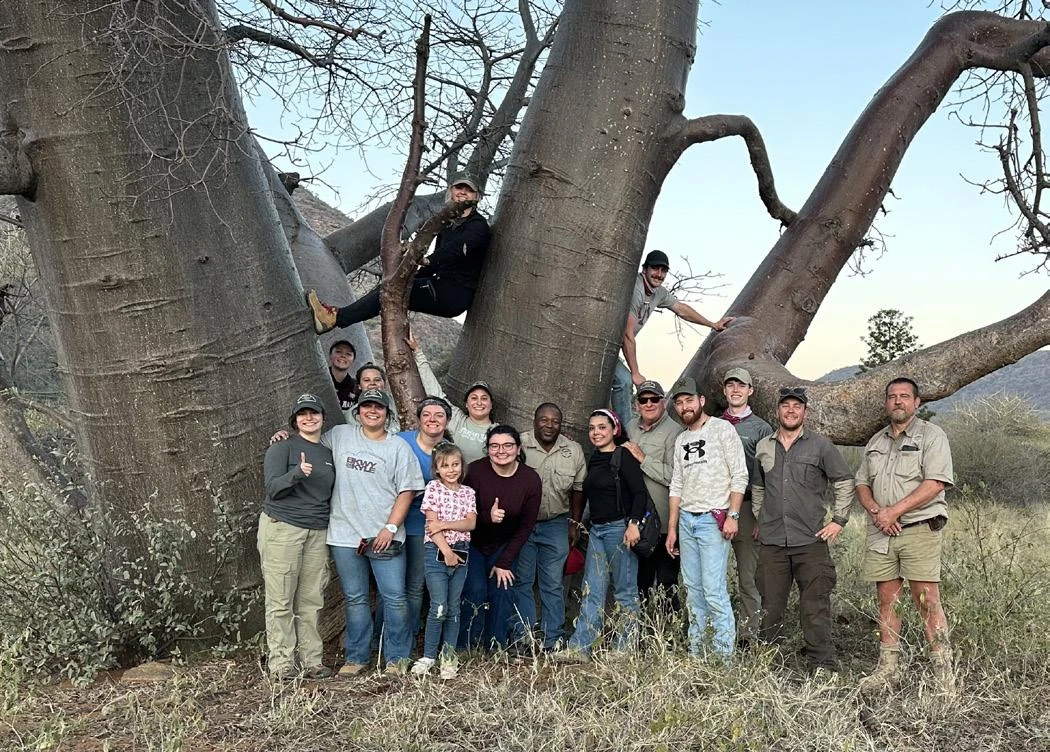
Photographs from “African Wildlife Medicine” by James Derr, Hunter’s Horn, Spring 2024. Course experiences shown are from 2023; cases vary with animal needs and field conditions.
Patient-first learning
Every case, role and teaching moment begins with the same standard: the welfare of the animal comes first. Field conditions and the direction of the attending veterinarian determine what happens next.
Students learn that sound veterinary judgment starts with the animal, the condition and the circumstances—not a prewritten schedule.
Licensed wildlife veterinarians direct all clinical work and decide when participation, observation or restraint is appropriate.
Teams examine the decisions behind the work so students leave with clearer habits of preparation, communication and care.
Partner-location fieldwork
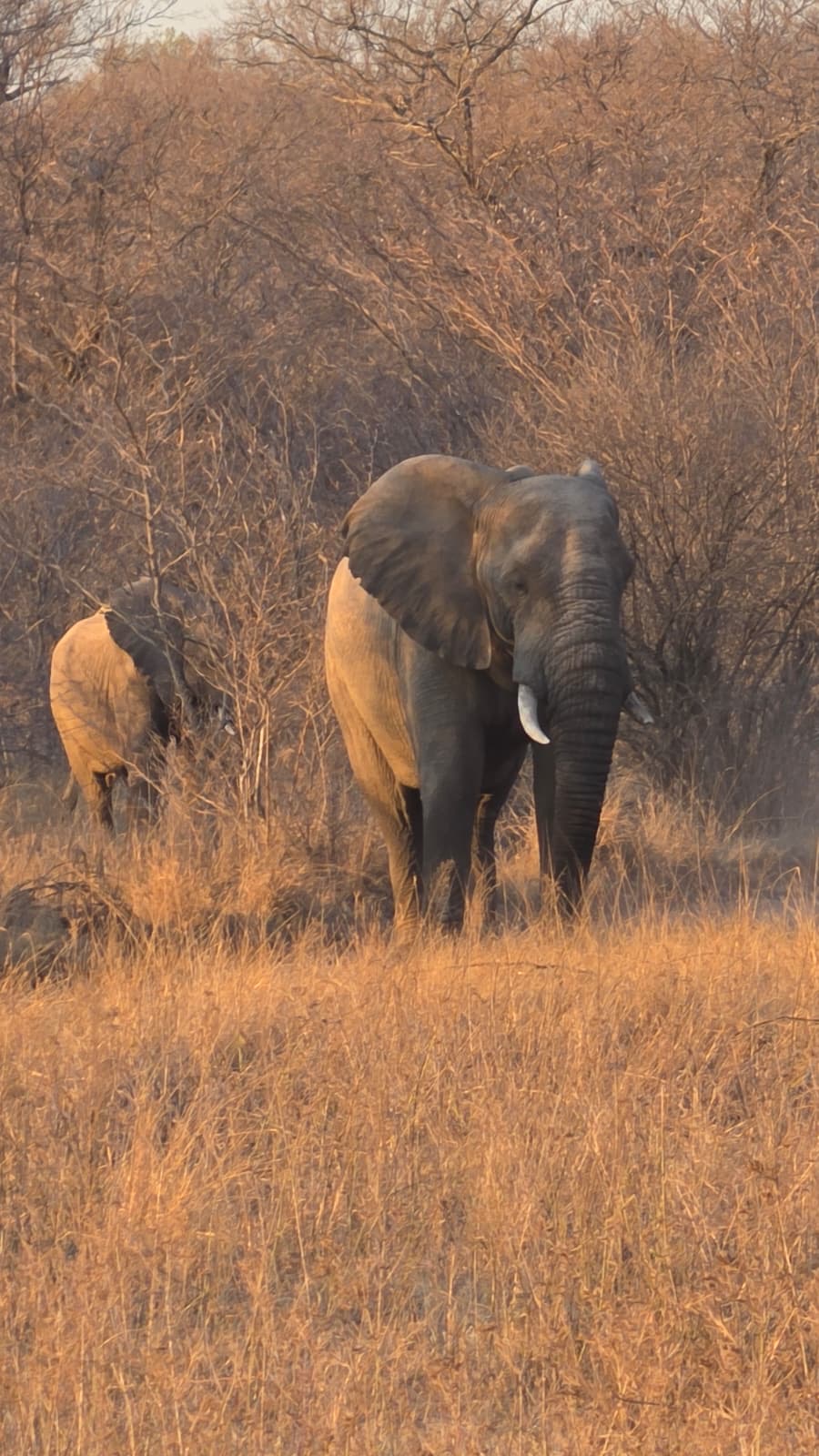
When genuine cases and partner schedules allow, student groups travel with the professional team for licensed, supervised work with elephant, rhinoceros and lion patients. These animals are not at Seringa Ranch, and these cases do not take place on the ranch.
More than clinical technique
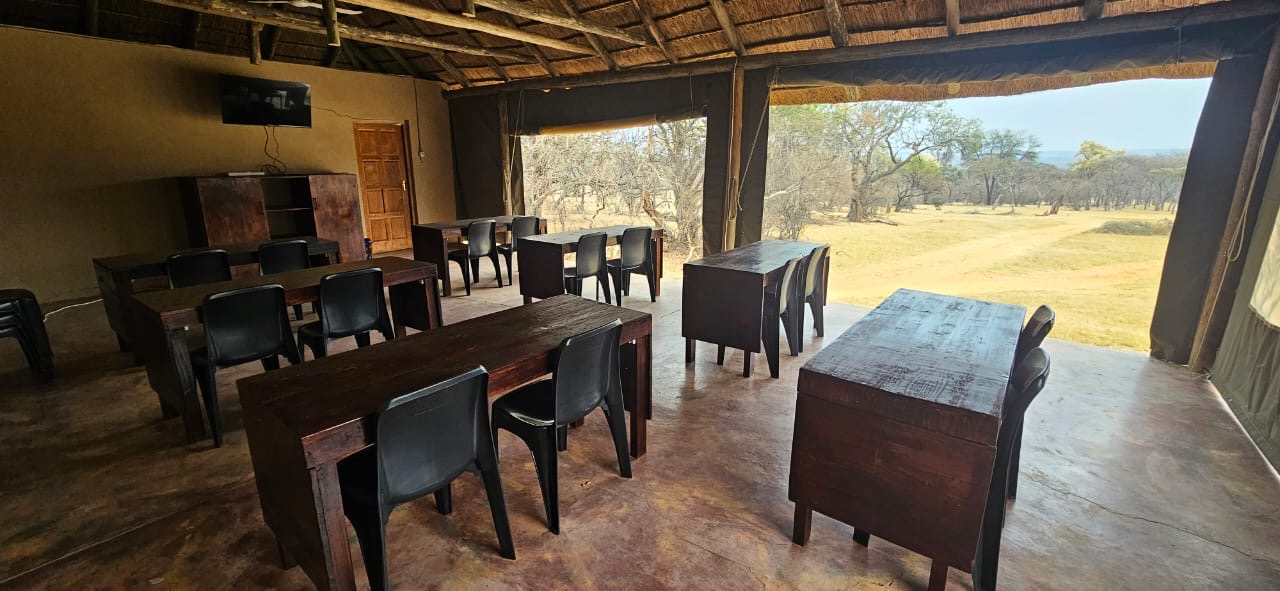
At the lodge, the day can be discussed while it is still fresh: what worked, what changed, what the patient taught and what each student would carry into the next case.
Briefing, preparation and role assignment.
Supervised field participation and observation.
Recovery review, discussion and professional reflection.
Programs are currently offered during the summer. A semester-abroad format is not presently available. Schedules and cases are designed with each university and may change to protect patient welfare or respond to field conditions.
Fourteen days in photographs
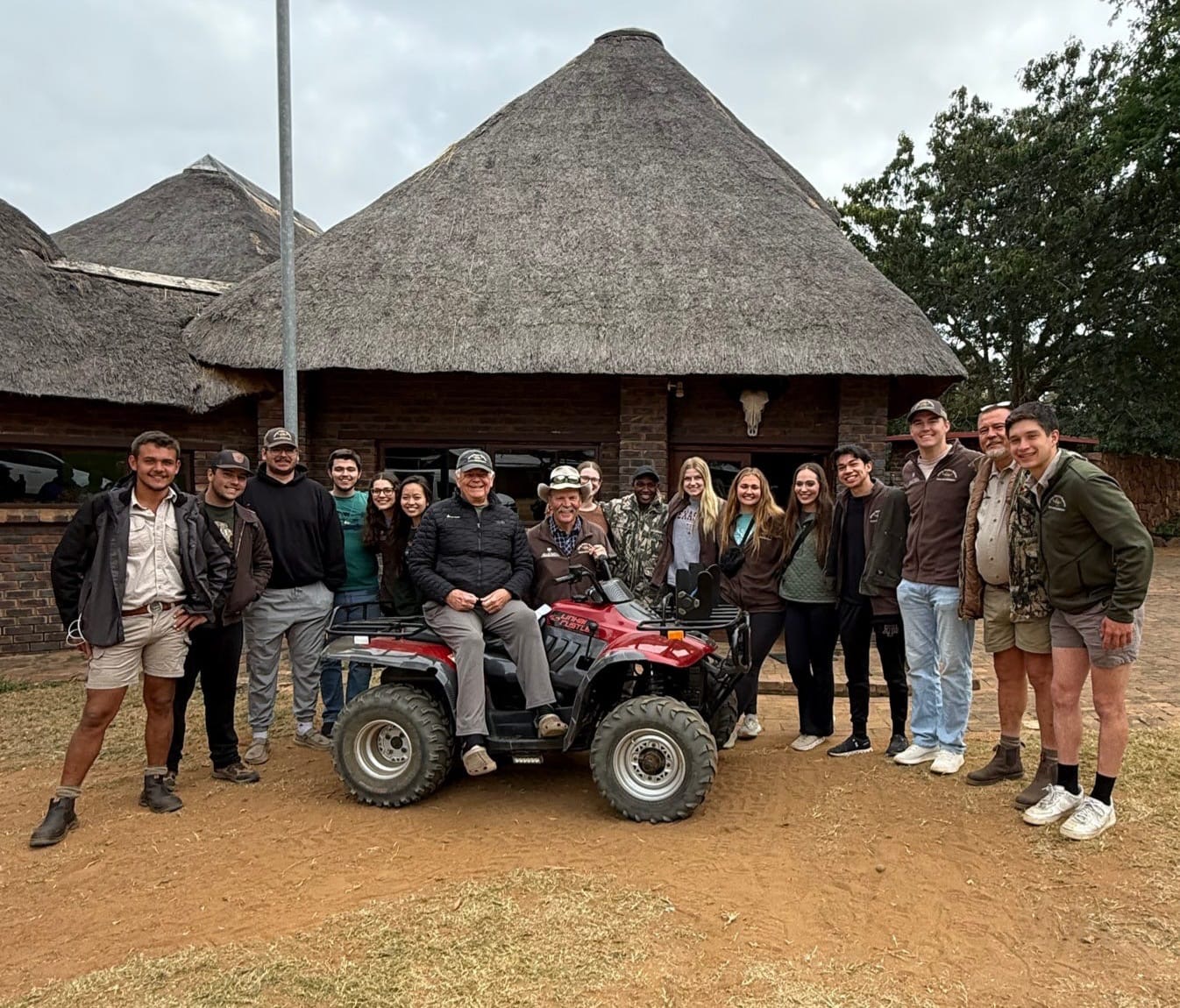
Early starts, exacting clinical responsibilities and patient-first decisions are balanced by shared meals, long conversations and the friendships that turn a group into a field team.
For veterinary schools
Seringa does not contract directly with individual veterinary schools. Leading veterinary professors at Texas A&M coordinate with interested schools and use the university’s agreement with Seringa to schedule each course, while experienced local veterinarians guide the South African field component.
The two-week format is scheduled during summer, and Seringa currently has capacity for a maximum of two additional university groups.
Interested schools begin with leading veterinary professors at Texas A&M, who coordinate the academic relationship and scheduling pathway with Seringa.
Local wildlife veterinarians provide species knowledge, supervise clinical work and connect the academic program to South African practice.
Bring your university to Seringa
Veterinary schools should coordinate through leading veterinary professors at Texas A&M rather than contracting with Seringa directly. Texas A&M uses its partnership agreement with Seringa to schedule the program, and experienced local veterinarians help lead the field experience.